PURPOSE
Why we use AI.
Years of study or ministry may give a person something worth preserving without giving that person the time or skill to write a polished manuscript unaided. Our producer-led approach is intended to reduce that barrier, helping serious human thought take the form of a coherent, useful book. The opportunity matters because we seek works that serve the Church, not because technology makes it possible to generate more pages.
THE HUMAN PRODUCER
What a Book Producer does.
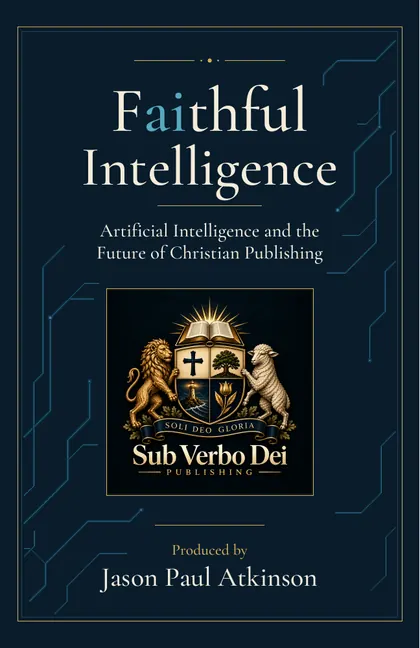
We call the responsible human director of a substantially AI-assisted work its Book Producer. The producer determines what the book seeks to communicate and exercises meaningful control over its development and final form. That person need not personally compose most of its sentences, but must understand the work well enough to judge its argument, correct its weaknesses, and stand behind its publication. A few prompts and superficial approval do not qualify someone for this role.
THE ROLE OF TECHNOLOGY
What AI may do—and may not decide.
AI may perform substantial drafting and help restructure, compare, and edit material within a human-directed process. It may assist research and the examination of arguments, but it is not the author or theological authority and cannot bear responsibility for the book. Decisions about what to retain, what requires correction, and whether a manuscript is ready for publication remain with the producer and the press.
VERIFICATION
Generated text is not its own evidence.
An AI response is never sufficient verification of a factual or source-dependent claim. Significant claims and quotations require checking against appropriate sources, with primary sources preferred when evaluating what a named person or tradition teaches. Scripture requires particular care so that quotations are accurate and interpretation respects the passage’s context. Fabricated material calls for correction and review, while the producer remains accountable for the material approved.
CRAFT AND DOCTRINE
The standard remains a worthy book.
AI assistance does not make weak arguments or repetitive prose acceptable, and polished language does not excuse unsupported conclusions. A manuscript must read as a coherent book and remain within the press’s governing doctrinal commitments, with responsible human judgment directing theological review. The producer must review the complete final manuscript, and producer approval alone does not secure the imprint; the press must also approve the work for publication.
TRANSPARENCY
Readers should know how it was made.
Substantial generative-AI participation must be disclosed in the book rather than obscured by conventional authorship language. Where the Producer designation applies, the preferred reader-facing credit is “Produced by [Name]”, following the required certification. The production disclosure identifies the substantial AI contribution, explains the human producer’s direction and approval, and makes clear that responsibility remains human.